

How to Use Herbs to Boost Digestive Enzymes Naturally
Digestive enzymes are essential for breaking down food into nutrients your body can absorb. If you're struggling with bloating, gas, or nutrient absorption, certain herbs can naturally boost your enzyme production and improve digestion. Here's how:
- Ginger: Contains zingibain, which helps digest proteins, and stimulates enzymes like amylase and lipase. Best used raw or in tea.
- Fennel Seeds: Known for reducing bloating and cramping, they promote enzyme secretion and relax gut muscles. Chew them after meals or brew as tea.
- Peppermint: Calms muscle spasms and reduces gas but doesn’t directly boost enzymes. Best as enteric-coated capsules or tea.
Incorporate these herbs into your diet through teas, cooking, or supplements. Always choose high-quality, organic sources and consult a healthcare provider if you take medications or have specific conditions.
Top Natural Herbs to Improve Digestion (Supplements, Tinctures, & Teas)
Best Herbs for Digestive Enzyme Support
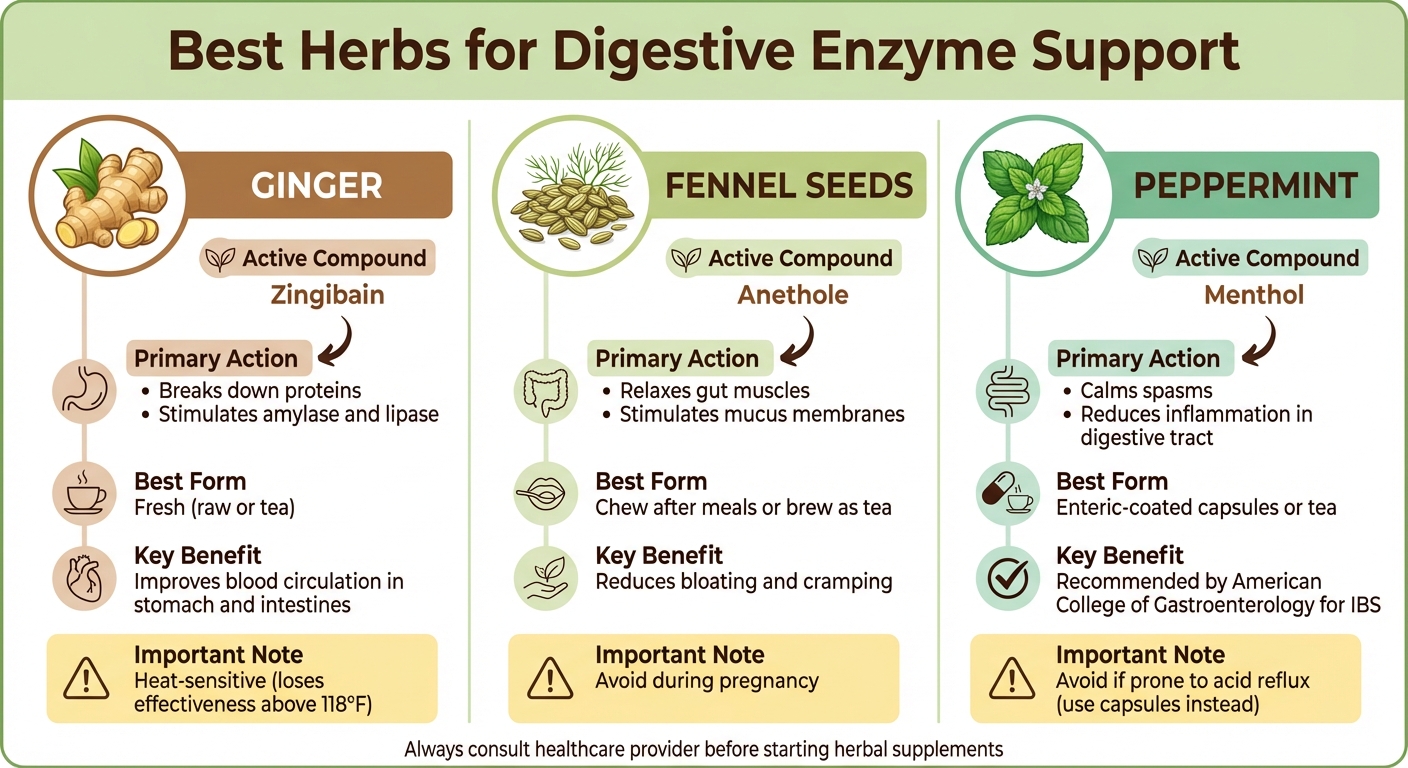
Top 3 Herbs for Digestive Enzyme Support: Active Compounds and Benefits
When it comes to improving digestion naturally, a few herbs stand out for their ability to support enzyme production and overall gut health. Below, we'll explore three herbs known for their digestive benefits and how they work to enhance your body's natural processes.
Ginger for Digestion
Ginger has earned its reputation as a go-to herb for digestive health. It contains zingibain, a protease enzyme that helps break down proteins into amino acids, making them easier for the body to absorb. Beyond zingibain, ginger stimulates the production of other key enzymes like amylase and lipase, which aid in carbohydrate and fat digestion.
Fresh ginger is the best option for reaping its full benefits. Whether juiced, steeped as tea, or added to smoothies, fresh ginger delivers the highest potency. While dried ginger in capsule form is convenient, it’s not as effective as the fresh version. Ginger also improves blood circulation in the stomach and intestines, enhancing nutrient absorption and overall digestive efficiency.
"Fresh ginger... may encourage your body to produce more of its own digestive enzymes." - Dr. Andrew Greenland, Functional Medicine Practitioner
Keep in mind that zingibain is sensitive to heat and loses its effectiveness when exposed to temperatures above 118°F. To maximize its impact, use ginger in raw or gently heated preparations.
Fennel Seeds for Digestive Support
Fennel seeds are a traditional remedy for easing digestion and reducing bloating. Their active compound, anethole, works as an antispasmodic, relaxing the muscles in your digestive tract and stimulating mucus production for smoother digestion. In Ayurvedic practices, fennel is used to "ignite" digestion, helping the body transform and absorb nutrients more effectively.
"Fennel is also believed to promote the secretion of digestive enzymes and to improve a weak appetite." - Dr. Mary James, ND, Women's Health Network
For best results, chew fennel seeds after meals to release their oils, which can reduce gas and stimulate enzyme activity. Toasting the seeds lightly before chewing enhances their flavor and effectiveness. Alternatively, fennel tea provides a soothing digestive aid, and fennel seed oil emulsions are another option for improving gut motility. However, fennel should be avoided during pregnancy.
Peppermint for Digestive Health
Peppermint takes a different approach to aiding digestion. Instead of directly boosting enzyme production, it creates a relaxed environment in the digestive system. The herb’s active compound, menthol, acts as a muscle relaxant, calming spasms and reducing gastrointestinal contractions. This makes peppermint especially helpful for easing gas, bloating, and cramping.
Enteric-coated peppermint oil capsules are particularly effective because they deliver menthol directly to the lower intestine, where it’s needed most. In fact, the American College of Gastroenterology recommends peppermint oil as part of its guidelines for managing Irritable Bowel Syndrome (IBS). For a milder option, peppermint tea can be enjoyed after meals to soothe the digestive tract. However, those prone to acid reflux should opt for enteric-coated capsules to avoid triggering heartburn.
| Herb | Active Compound | Primary Digestive Action |
|---|---|---|
| Ginger | Zingibain | Breaks down proteins; stimulates amylase and lipase |
| Fennel | Anethole | Relaxes gut muscles; stimulates mucus membranes |
| Peppermint | Menthol | Calms spasms; reduces inflammation in the digestive tract |
How to Add Herbs to Your Daily Diet
Adding ginger, fennel, and peppermint to your routine is easier than you might think. Whether you incorporate them into meals, brew them into teas, or take them as supplements, there’s an option for every lifestyle.
Cooking with Herbs
Fresh ginger and fennel can bring both flavor and health benefits to your meals. For example, sliced ginger works well in soups, stir-fries, or sautéed vegetables, where it can help with gas and circulation issues. Another idea? Sauté ginger in ghee, mix it into warm milk, and add a touch of honey for a soothing Ayurvedic drink.
Toasted fennel seeds are another versatile option. Sprinkle them over roasted vegetables, salads, or grain bowls to enjoy their aromatic oils, which may ease cramping and bloating.
If you’re on the go, herbal lozenges can be a lifesaver. Mix powdered ginger, cardamom, and honey to make small, portable lozenges. These bite-sized digestifs pack a punch of flavor and convenience.
Not in the mood for cooking? Herbal teas are another simple way to enjoy these herbs.
Preparing Herbal Teas
Herbal teas allow the active compounds in herbs to be absorbed quickly, making them an effective alternative to pills. The preparation method varies depending on the herb.
For delicate herbs like peppermint or chamomile, steep them in boiled water for 5–10 minutes. Harder roots and seeds, such as ginger or dandelion root, require a decoction. Boil 2 tablespoons of fresh sliced ginger root in 2 cups of water for 10–20 minutes to extract its gingerols. Crushing fennel or cardamom seeds before brewing helps release their oils.
"It's important to actually taste the bitterness because that experience in and of itself activates a cascade of receptors on our tongue and throughout the digestive system." - Sarah Levine, Clinical Herbalist
Bitter herbs like dandelion or gentian are best consumed 15–30 minutes before meals to prepare your body for digestion. Avoid adding too much sweetener, as the bitterness itself triggers saliva and enzyme production. On the other hand, carminative teas like fennel and peppermint are ideal during or after meals to ease gas.
If you prefer a longer steep, use a French press. Herbs like marshmallow leaf and fennel can be infused for at least 15 minutes or even several hours for a stronger brew. For marshmallow root, a cold infusion works best: fill a jar one-third with the root, add cool water, and refrigerate overnight before straining. This method protects the mucopolysaccharides that help soothe the digestive system.
Using Herbal Supplements
If you’re short on time or prefer a precise dosage, herbal supplements are a convenient option. Peppermint, for instance, is available in enteric-coated capsules that deliver menthol to the lower intestine, where it can enhance enzyme activity. A 4-week study found that 75% of IBS participants reported improvement with peppermint oil. Ginger and fennel are also available in capsule or powdered forms, though fresh preparations are often more effective.
Bitter tonics and tinctures offer another approach. Take 1–2 mL of a bitter tincture 15–30 minutes before or after meals to stimulate digestion. You can even make a “bitter soda” by macerating dried orange peel, dandelion root, and gentian root in vodka for two weeks, then mixing a few droppers into sparkling water before meals. The key is to let the bitterness activate your digestive receptors.
When choosing supplements, look for high-quality, ethically sourced options. Brands like Strength Genesis combine quality with eco-friendly packaging, making them a thoughtful choice.
sbb-itb-132bd3c
Safety Guidelines for Using Digestive Herbs
Herbs like ginger, fennel, and peppermint can support digestion, but using the right doses is essential to ensure safety.
Proper Dosages for Each Herb
Peppermint oil: Enteric-coated capsules are the best option for delivering peppermint oil to the lower intestine while avoiding heartburn. Adults typically take 180–225 mg two to three times daily, with children’s doses adjusted based on weight. Clinical trials have shown that 75% of adults with IBS experienced symptom relief at this dosage, compared to 38% in the placebo group.
Ginger: A daily dose of 1–2 grams is effective for easing nausea. For a gentler option, fresh ginger tea - made by steeping peeled, sliced ginger root in boiling water for at least 10 minutes - can be a soothing alternative to supplements. However, higher doses of ginger supplements may increase the risk of bleeding, especially for individuals on blood-thinning medications.
Fennel: Often consumed as a mild tea or in combination remedies, fennel essential oil is typically dosed at one drop three times daily. For children, fennel tea is the safest choice, though dosing should account for age and weight.
While these herbs can be beneficial, understanding their potential side effects and interactions is equally important.
Side Effects and Drug Interactions
Herbs can cause adverse effects if overused or combined with certain medications. For example, peppermint may lead to heartburn, nausea, vomiting, perianal burning, or blurred vision when consumed in excessive amounts.
"Peppermint is safe when consumed in small doses in tea, candy, or chewing gum... however, peppermint may produce reactions such as heartburn, perianal burning, blurry vision, nausea, and/or vomiting if you consume too much".
In extreme cases, very high doses of peppermint can cause muscle weakness, seizures, or brain damage. People with GERD, hiatal hernia, or bile duct obstructions should avoid peppermint, as it relaxes the lower esophageal sphincter and can worsen reflux symptoms.
Ginger may irritate peptic ulcers and interact with blood-thinning medications like warfarin or aspirin. Additionally, individuals allergic to plants in the Umbelliferae family - such as celery, carrots, parsley, and dill - should steer clear of fennel and caraway.
Timing is another factor to consider. For instance, marshmallow root contains mucilage that can interfere with the absorption of medications, so it should be taken several hours apart from other drugs. Pregnant women should avoid unripe papaya, as its papain content can trigger contractions, and exercise caution with peppermint oil and caraway due to limited safety data.
If you’re on prescription medications, consulting your healthcare provider before using herbs is critical. Studies show that about one in four prescription drug users also take dietary supplements, which increases the risk of serious interactions. Use reliable interaction checkers or seek professional advice before combining herbs with medications.
Choosing Quality Herbs and Products
Finding Organic and Ethically Sourced Herbs
Picking the right herbs is key to supporting natural enzyme production and improving digestive health. Since over-the-counter (OTC) herbal supplements aren’t regulated by the FDA, there’s no guarantee about their dosage, ingredients, or enzyme concentrations. As Morgan Denhard, a Registered Dietitian at Johns Hopkins Medicine, points out:
"Over-the-counter digestive enzyme supplements aren't regulated by the FDA. So the dosage, ingredients and enzyme concentration aren't guaranteed, and their side effects are unknown."
When shopping for herbs, the type and variety make a big difference. For example, opt for true Ceylon cinnamon instead of Cassia to ensure consistent benefits. Similarly, fresh ginger root is often preferred over dried forms for certain digestive uses, though both can be effective. If you’re harvesting wild herbs like dandelion, steer clear of areas near busy roads or spots that might have been treated with chemicals.
For digestive health, raw plant materials, spices, or tinctures are excellent choices. If using licorice, look for deglycyrrhizinated licorice (DGL), which removes glycyrrhizic acid - a compound linked to high blood pressure and water retention.
When purchasing dried or roasted herbs, stick to trusted herbal suppliers or natural food stores. For enzyme-rich products like honey, check for labels that say "raw" to ensure it hasn’t been heated, which preserves its natural enzymatic properties. If you’re unsure, consulting with a clinical herbalist or naturopath can help you find high-quality, ethically sourced tinctures tailored to your needs.
Careful sourcing of herbs sets a strong foundation for digestive support, which can be amplified by pairing them with supportive nutrients.
Complementary Strength Genesis Products

Combining high-quality herbs with targeted nutrients can further enhance digestive health. Together, these elements promote enzyme production and help reduce inflammation.
Zinc and vitamin D are essential for pancreatic enzyme production. Zinc aids in hydrochloric acid (HCL) production, while vitamin D supports enzyme-dependent processes in the pancreas. Omega-3 fatty acids also play a role by reducing inflammation in the gut. Strength Genesis offers Omega 3 Pharmaceutical Grade, Molecularly Distilled Cold Processed Fish Oil sourced from Iceland. Priced at $64.97 per bottle, this cold-processed formula preserves the integrity of Omega-3s, promoting heart health and cognitive function.
For cooking, try Australian Macadamia Nut Oil, which surpasses olive oil in Omega-3 content and stays stable at temperatures up to 515°F. This cold-pressed oil comes in glass bottles at $29.97, with a 50ml mini bottle available for $9.99. Strength Genesis prioritizes ethically sourced ingredients and eco-friendly packaging, avoiding plastic, styrofoam, and mylar - aligning perfectly with the principles of selecting responsibly produced herbs.
Conclusion
Herbs can play a key role in supporting digestive health by stimulating enzyme production and soothing the gut. Bitter herbs encourage enzyme activity, while carminative options like ginger and fennel help ease discomfort from gas and cramping. Meanwhile, soothing herbs work to protect the gastrointestinal lining, offering a multi-faceted approach to gut care. This is especially important as enzyme production tends to decline naturally with age.
If you're new to using herbs, start small. Try incorporating one or two, such as ginger tea or chewing on fennel seeds, to observe how your body reacts. Since each herb has a unique effect, this gradual approach allows you to monitor results effectively. While acute issues might show improvement within a day, chronic conditions often require a couple of weeks to see noticeable benefits.
These small, practical steps can pave the way toward sustained digestive health. As one clinical herbalist aptly puts it:
"The road to health is paved with good intestines. It's true; the gut is the gateway to optimal physical and psychological health".
Considering that around 60 to 70 million Americans are affected by digestive diseases, introducing herbs into your daily routine could be a simple yet impactful way to improve digestive function.
For the best results, prioritize high-quality, ethically sourced herbs. Pairing these with a diet rich in whole foods can further boost digestion and reduce inflammation. Whether it's adding bitter greens to your salad, sipping peppermint tea post-meal, or taking a bitter tonic 15 to 30 minutes before eating, these easy adjustments can help restore balance to your digestive system. By integrating herbs into your routine, you can naturally support enzyme production and take a step toward better overall wellness.
FAQs
What’s the best way to use ginger to support healthy digestion?
Ginger has long been celebrated as a natural aid for digestion, and it's surprisingly simple to weave into your everyday meals. You can steep freshly grated ginger in hot water for a calming tea, toss it into your smoothies for an added zing, or use it to enhance the flavor of stir-fries, soups, or even salad dressings.
To get the most out of it, stick with fresh ginger root - about 1–2 inches per serving is a good guideline. While powdered ginger or capsules are also available, it's wise to check with a healthcare provider before adding any supplements to your routine. Incorporating ginger regularly into your diet is a flavorful way to support digestion and promote a sense of overall well-being.
Is it safe to use fennel for digestion, and are there any potential interactions?
Fennel is often praised for its role in aiding digestion and is generally safe for most people. That said, it’s wise to stay informed about potential concerns and interactions. For instance, some people might experience allergic reactions to fennel. Additionally, because fennel contains phytoestrogens, it could potentially influence hormone-sensitive conditions. If you’re taking medications like hormone therapies or drugs that affect estrogen levels, fennel might interfere with their effectiveness.
Pregnant or breastfeeding women should also exercise caution. Using fennel in large amounts or as a supplement may have hormonal effects, so it’s best to consult a healthcare provider first. Ultimately, it’s always a good idea to consider your personal health circumstances and discuss any concerns with a healthcare professional before incorporating fennel into your routine for digestive support.
What’s the safest way to use peppermint for better digestion without triggering heartburn?
To help with digestion while minimizing the risk of heartburn, try enteric-coated peppermint oil capsules. These capsules are designed to pass through the stomach and dissolve in the intestines, which helps prevent reflux and irritation. If you prefer a milder approach, peppermint tea can be a soothing choice. However, for those who experience acid reflux or GERD, it’s wise to consume peppermint tea sparingly, as peppermint may relax the lower esophageal sphincter, potentially aggravating symptoms.
Before starting peppermint supplements or if you have any digestive issues, it’s a good idea to consult with a healthcare provider to make sure they’re a safe option for you.